
How to Choose Tennis String Types: A Pro Player’s Guide
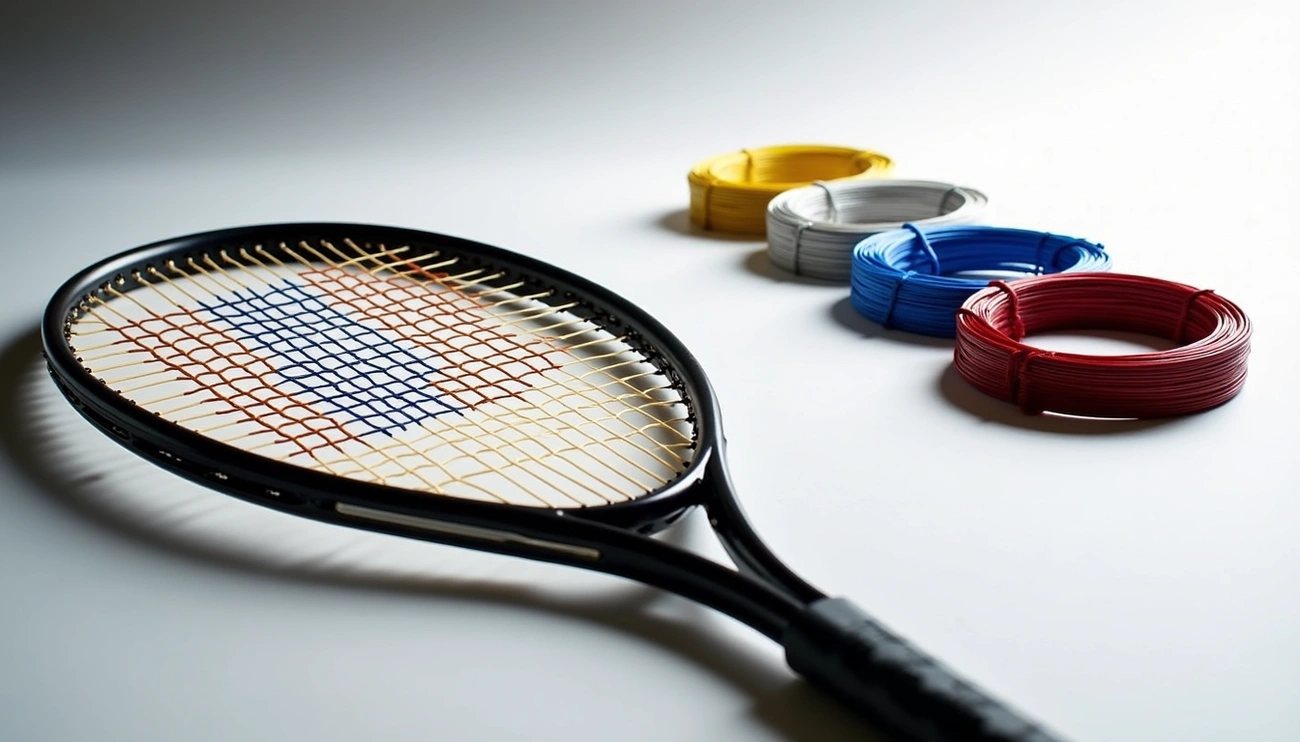
Did you know that 70% of your tennis racquet’s performance comes from the tennis string types you choose?
Most recreational players spend hours selecting the perfect racquet while overlooking the crucial impact strings have on their game. The right strings can dramatically enhance your power, control, spin potential, and even reduce your risk of injury.
However, navigating the complex world of tennis strings can be overwhelming. From natural gut to polyester, multifilament to synthetic options, each material offers distinct advantages for different playing styles and skill levels.
Importantly, your optimal string setup depends on several factors: your playing style, experience level, physical condition, and personal preferences. The perfect string for a baseline power player differs significantly from what works best for a serve-and-volley specialist.
This comprehensive guide breaks down everything you need to know about tennis string types, helping you make an informed decision that elevates your performance on the court. Let’s get started with finding your perfect string match!
Match Strings to Your Playing Style
Finding the perfect match between your playing style and tennis string types can substantially improve your game. According to tennis experts, matching strings to your playing technique is more important than many players realize. Let’s explore which strings best suit different playing styles and needs.
Power: For players who need help generating pace
Not everyone has the physical strength to generate explosive power on their shots. If you’re looking to add some extra pace to your game, the material of your strings makes all the difference. Natural gut and multifilament strings excel in this department due to their inherent elasticity.
Multifilament strings like Wilson NXT and Tecnifibre X-One Biphase provide excellent power and are specifically designed for players who need that extra trampoline effect. These strings contain multiple flexible fibers bonded together with stretchy polyurethane, creating a powerful response when the ball contacts the stringbed.
For beginners seeking more power, a good rule to follow is: softer is better. Additionally, stringing at lower tensions within your racquet’s recommended range will increase the trampoline effect and consequently provide more power. This combination gives you the added pace without requiring significant technique adjustments.
Control: For experienced players who create their own power
Advanced players who generate their own power typically need strings that help tame their aggressive shots. For these players, polyester strings offer superior control and precision. The magic ingredient behind their control properties is high stiffness, which produces more manageable ball speeds and shot trajectories.
Popular control-oriented strings include Luxilon ALU Power (a favorite on the professional tour), Solinco Hyper-G, and Grapplesnake Tour Sniper. These polyester options provide a crisp, firm response that helps experienced players place the ball precisely where they want it.
Tournament players often choose higher tension setups (24-28 kg) for enhanced control and better feel for the ball. This firmer stringbed allows them to swing freely while maintaining accuracy. Nevertheless, these stiffer strings aren’t recommended for beginners who haven’t yet developed proper technique.
Comfort: For players with arm sensitivity or injuries
Arm health should be a priority for all players, especially those with existing injuries or sensitivity. For comfort seekers, natural gut strings offer the best shock absorption due to their inherent flexibility. Although more expensive, they provide unmatched power and comfort.
Quality multifilament strings like Babolat Xcel, Head Velocity MLT, and Wilson NXT have built excellent reputations as arm-friendly options. These strings contain more than 1,000 ultra-flexible fibers that effectively dampen the brutal force of ball impact.
For players experiencing pain while playing, it’s advisable to string at the lower end of the manufacturer’s recommended tension range. Lower tension allows the strings to “pocket” the ball better, absorbing shock and vibration rather than transferring it to your arm.
Spin: For players who rely on topspin and heavy shots
In today’s game, spin has become increasingly important for controlling powerful shots. By nature of their construction, polyester-based strings are inherently spin-friendly. Their unique properties create the crucial “snap-back” effect that generates rotation on the ball.
Data shows approximately 35% of tournament-level players in UK’s Premier Tennis Leagues now use spin-enhancing polyester strings – a 10% jump from previous years. Popular spin-friendly options include Babolat RPM Blast Rough, Solinco Hyper-G, and Prince Vortex Triad.
For maximum spin potential, shaped polyester strings with geometric profiles (hexagonal, octagonal, or twisted) provide exceptional bite on the ball. Furthermore, the stiffness of polyester combined with its low-friction surface creates explosive snap-back that dramatically increases spin rates.
Understand String Materials
Tennis strings come in four primary material types, each with distinct playing characteristics that can make or break your performance on court. Selecting the right material is perhaps the most crucial decision when choosing strings, as it fundamentally determines how your racquet will respond during play.
Natural Gut: Best feel and comfort, but expensive
Originally made from sheep intestine in 1875 and now manufactured from cow intestine, natural gut remains the gold standard in tennis strings. This premium option delivers unmatched elasticity and tension maintenance. Natural gut stretches and returns to its original form better than any synthetic alternative, providing exceptional power without sacrificing control.
The primary benefits of natural gut include superior comfort for players with arm issues, excellent tension retention, and enhanced power generation. Notably, natural gut holds its tension longer than any other string type, maintaining playability throughout its lifespan.
The drawbacks are equally significant: natural gut is the most expensive option available, with prices ranging from $20 for a half set to $60 for a full set. Additionally, it requires special care as humidity and moisture can damage the strings. Popular brands include Babolat VS Touch, Wilson Natural Gut, and Luxilon Natural Gut.
Multifilament: Soft and powerful, great for beginners
Multifilament strings consist of hundreds or even thousands of microfibers woven together, designed to imitate natural gut’s performance at a more accessible price point. These strings incorporate materials like nylon with polyurethane bonding to create a responsive, arm-friendly option.
The standout characteristics of multifilaments include excellent comfort, good power, and optimal playability. They excel at shock absorption, making them ideal for players suffering from tennis elbow or joint pain. Price points range from $5 to $20, offering options for various budgets.
High-quality multifilaments like Tecnifibre NRG2, Wilson NXT, and Wilson Sensation provide a soft, powerful response that beginners and intermediate players will appreciate. First-time string buyers or those prioritizing comfort should consider multifilaments as their initial choice.
Polyester: Durable and control-oriented, ideal for advanced players
Polyester strings have transformed professional tennis since their breakthrough with Gustavo Kuerten at the 1997 French Open. These stiffer strings offer exceptional control and spin potential, making them the dominant choice on the professional tour.
The primary advantages include outstanding durability, superior control, and unmatched spin generation. Many polyester strings feature shaped profiles (hexagonal or octagonal) that enhance spin through improved ball grip.
Certainly, polyester has limitations: it’s generally harsher on the arm, loses tension faster than other materials, and offers less power. Manufacturers have responded with “soft poly” options that provide better comfort while retaining control and spin benefits. Leading brands include Luxilon ALU Power, Babolat RPM Blast, Solinco Hyper-G, and HEAD Hawk Touch.
Synthetic Gut: Affordable and balanced option
Synthetic gut strings represent the entry-level option for most players. Primarily constructed from nylon with a solid central core and one or more outer filament layers, these strings offer balanced performance at budget-friendly prices.
The key benefits include economical pricing (typically under $5 per set), good all-around playability, and better durability than multifilaments. They provide a middle ground between natural gut’s softness and polyester’s firmness.
While synthetic gut doesn’t excel in any particular performance category, its balanced characteristics make it an excellent choice for recreational players or those just starting their tennis journey. Popular options include HEAD Synthetic Gut, Wilson Synthetic Gut Power, and Gamma Synthetic Gut with Wearguard.
Gage and Tension Explained
Understanding gage and tension is crucial when selecting tennis string types. These technical specifications directly impact your performance and can be tailored to match your playing style.
What is string gage and how it affects play
String gage simply refers to the thickness of your strings, typically measured in millimeters (mm). The gage is represented by numbers where, interestingly, lower numbers indicate thicker strings. Common gages range from 15L (1.35mm) to 18 (1.10mm). This measurement isn’t standardized across manufacturers, therefore actual millimeter dimensions provide more precise guidance.
Gage significantly influences your game in multiple ways. Thicker strings deliver enhanced control and durability, whereas thinner strings offer superior power, comfort, and spin potential. The thickness affects how strings interact with the ball – thinner strings bite into the ball more effectively, creating additional grip and spin potential.
Choosing the right gage for your level
Your playing level should guide your gage selection:
- Beginners: Start with thicker gages (15-16) for increased durability while developing technique
- Intermediate: Try 17 gage strings for a balanced mix of performance and durability
- Advanced: Experiment with thinner gages (17-18) to maximize feel and control
Players who frequently break strings should opt for thicker gages, regardless of skill level. Similarly, those experiencing arm discomfort might benefit from thinner strings, which provide better shock absorption.
How string tension impacts power and control
String tension—measured in pounds or kilograms—refers to how tightly strings are pulled when installed in your racket. Each racquet features a manufacturer-recommended tension range, usually between 50-60 pounds.
The tension fundamentally affects the “trampoline effect” upon ball impact. Higher tension creates a firmer stringbed that reduces string movement, providing more control but less power. Conversely, lower tension generates more power as strings deform more upon impact and snap back with greater force.
Moreover, tension influences comfort and feel. A racket strung at inappropriate tension can feel jarring and potentially lead to injury.
Recommended tension ranges for different players
For multifilament or synthetic gut strings, start at the middle of your racquet’s recommended range. With polyester strings, begin 2-3 pounds below the middle range, as these strings are inherently stiffer.
Based on playing styles, consider these tension ranges:
- Power baseliners: 45-52 lbs (polyester) / 52-58 lbs (multifilament)
- Spin-focused players: 44-50 lbs (polyester) / 50-55 lbs (multifilament)
- Flat hitters/net players: 50-55 lbs (polyester) / 55-60 lbs (multifilament)
Remember that weather conditions also affect string performance—cold weather stiffens strings, while warm, humid conditions loosen them. Professional players often adjust tension based on these factors, sometimes carrying multiple racquets strung at different tensions to adapt throughout matches.
Hybrid Stringing Setups
Hybrid stringing setups have gained remarkable popularity among professional players, with approximately 45% of top 20 ATP players and 65% of WTA players using this technique to optimize their performance.
What is hybrid stringing?
Hybrid stringing involves using two different string types within the same racquet—one for the vertical mains and another for the horizontal crosses. This approach allows players to customize their string bed and capitalize on the strengths of each material. Unlike conventional setups, hybrid stringing typically uses four knots, which improves tension maintenance throughout play. Players can mix various string materials (multifilament, polyester, natural gut), gages, and tensions to achieve their desired performance characteristics.
Best hybrid combinations for different skill levels
For beginners and intermediate players, a multifilament in the crosses paired with a more durable synthetic gut in the mains offers a good balance of comfort and longevity. This combination reduces cost while providing adequate playability.
Advanced players often prefer polyester mains with multifilament crosses, blending the spin and control of polyester with the comfort of multifilament. This setup works particularly well for those seeking more control without sacrificing arm health.
Professional-level players frequently choose natural gut mains with polyester crosses (or vice versa). The Wilson Champion’s Choice hybrid, made famous by Roger Federer, exemplifies this premium configuration that delivers exceptional feel, control, and spin potential.
How to balance control and comfort in hybrids
The main strings determine approximately 70% of your racquet’s overall feel and performance. For maximum control, install polyester in the mains; for enhanced comfort, use natural gut or multifilament instead.
Tension also plays a vital role in hybrid setups. Many players string the mains at a slightly higher tension to maintain control, while keeping the crosses at a lower tension for improved power and precision. This differential typically ranges between 2-3 pounds and should not exceed 5 pounds.
Ultimately, hybrid stringing presents an opportunity to fine-tune your racquet’s performance, creating a personalized setup that perfectly complements your playing style.
When and How Often to Restring
Keeping your equipment in peak condition requires attention to your tennis string types and knowing exactly when they need replacement. Properly maintained strings ensure optimal performance on court.
Signs your strings need replacing
Experienced players can instantly identify when strings lose their effectiveness. Watch for fraying or shaggy appearance on your strings, as these physical changes indicate breakdown. Upon hitting the ball, notice if you experience diminished power, odd thudding sounds instead of a crisp ping, or a dull feeling. Visible notching where strings cross each other, primarily with polyester strings, plus increased arm discomfort as elasticity decreases are clear indicators it’s time for new strings.
Restringing frequency based on play style
A practical guideline for casual players follows this formula: restring as many times per year as you play per week. Beginners should restring 1-2 times yearly, intermediate players every 3-4 months, advanced players every 2-4 weeks, plus tournament players before each competition. Baseline grinders wearing strings faster than serve-and-volley players. Furthermore, clay courts cause additional abrasion from dirt particles, whereas grass courts have minimal impact on string longevity.
How string type affects durability
Natural gut, despite superior performance, remains most vulnerable to tension loss, requiring frequent replacement. Conversely, polyester offers maximum durability yet differs significantly within its category – basic versions lose tension quickly. Multifilament provides reasonable longevity with better comfort than polyester. Remember that environmental factors like heat, sunlight, and moisture affect string performance, with synthetic options particularly susceptible to tension changes in extreme conditions.
Conclusion
Choosing the right tennis strings ultimately transforms your game beyond what most recreational players realize. Throughout this guide, we’ve explored how string selection affects every aspect of your performance, from power generation to control, comfort, and spin potential.
First and foremost, understanding your playing style remains essential for making informed string choices. Power players benefit from natural gut or multifilament options, while advanced players seeking control gravitate toward polyester strings. Additionally, players with arm sensitivity should prioritize comfort with softer options such as natural gut or quality multifilaments.
The material you select fundamentally shapes your racquet’s performance characteristics. Natural gut provides unmatched feel but comes with a premium price tag. Multifilament offers excellent comfort for beginners and intermediate players. Polyester delivers superior control and spin for advanced players. Synthetic gut presents an affordable, balanced option for recreational players.
String gage and tension further customize your setup, with thicker strings offering durability while thinner ones enhance feel and spin. Tension settings directly influence the power-control spectrum, allowing players to fine-tune their racquet’s response according to their preferences.
Hybrid stringing represents perhaps the most personalized approach, combining different string types to maximize benefits while minimizing drawbacks. This technique, favored by many professionals, creates unique performance characteristics tailored to individual needs.
Remember that even the best strings require regular replacement. Watching for physical signs of wear ensures consistent performance and prevents unnecessary arm strain from degraded strings.
The perfect string setup exists for every player – one that complements your technique, physical capabilities, and playing environment. Through experimentation and attention to the factors discussed, you’ll discover a configuration that elevates your game and enhances your enjoyment on court. After all, the right strings don’t just complete your racquet – they complete your tennis identity.