
How to Master Tennis Footwork Drills: A Pro Player’s Secret Guide
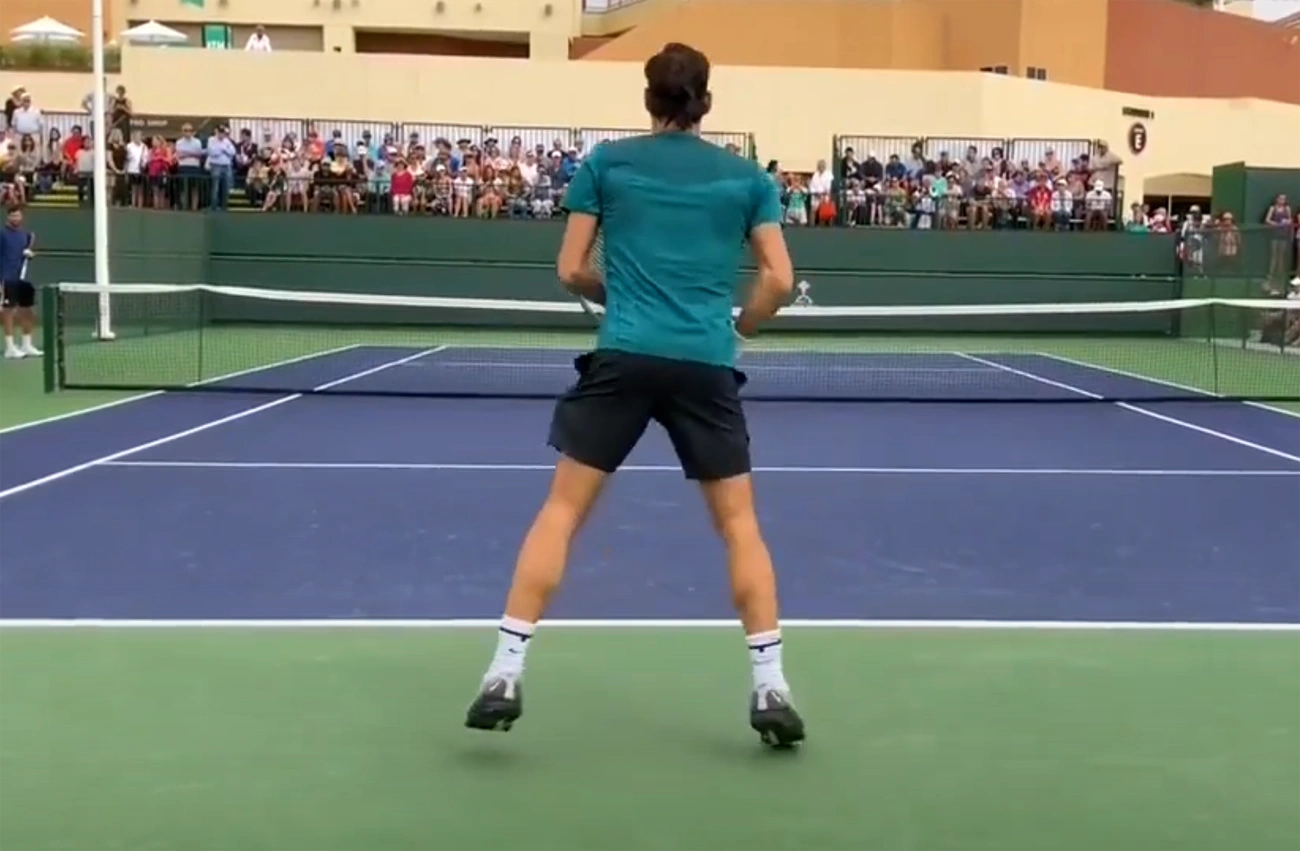
Did you know that professional tennis players can run up to 3 miles during a single match? Tennis footwork drills are the secret weapon that separates champions from average players on the court.
While most recreational players focus on perfecting their serve or forehand technique, elite athletes understand that footwork fundamentally determines shot quality, consistency, and longevity. In fact, proper movement patterns allow you to reach more balls, generate greater power, and maintain balance throughout lengthy matches.
Whether you’re struggling with reaching wide balls or finding yourself off-balance after shots, mastering the right footwork fundamentals will transform your game. The good news? You don’t need extraordinary speed to dramatically improve your court coverage.
Throughout this guide, we’ll break down the exact drills professionals use to develop championship-level footwork, address common movement mistakes, and provide a structured training plan that works for players at any level. By implementing these techniques consistently, you’ll experience immediate improvements in your court positioning, shot selection, and overall performance.
Why Footwork Is the Foundation of Tennis
Professional tennis players understand an essential truth about movement on court: footwork fundamentally shapes every aspect of their game. Tennis requires complex movement patterns that go far beyond simply running fast from one point to another.
Footwork vs. speed: what really matters
Many players mistakenly believe that raw speed is the key to effective court coverage. However, proper footwork actually matters more than pure velocity. Research shows that high-level tennis players make an average of four directional changes per point, with some rallies requiring up to 15 changes of direction.
Good footwork isn’t just about running faster—it’s about control, balance, and efficiency. While raw speed helps, footwork involves:
- Precise timing of the split-step (a preparatory movement performed just before the opponent’s stroke)
- First-step explosiveness after the split-step
- Efficient movement patterns specific to different court positions
- Proper recovery positioning between shots
The split-step, particularly, enables a faster reaction, quicker movement initiation, and more effective directional changes. Additionally, footwork quality varies based on the game situation and court surface. For instance, ATP players maintain different speeds when serving (0.8 m/s) versus playing baseline shots (1.28 m/s).
How movement affects shot quality and consistency
Footwork directly influences the quality and consistency of every stroke. When your feet position you correctly, you can strike the ball in your ideal hitting zone. Consequently, this translates to more consistent shot production and fewer errors.
Proper positioning through good footwork allows players to maintain balance throughout their strokes. Without this foundation, even technically sound players quickly break down under pressure. As noted by professional coaches, footwork is approximately 50% of what makes a successful groundstroke.
Furthermore, effective footwork creates better shot selection opportunities. By arriving at the ball earlier and in balance, players gain precious time to consider their tactical options rather than merely reacting. This positioning advantage allows players to:
- Hit their preferred shots more frequently
- Strike the ball with greater power and accuracy
- Make fewer unforced errors due to rushed positioning
Why footwork reduces fatigue and injury risk
Efficient footwork significantly impacts a player’s endurance and injury prevention. Players with optimized movement patterns conserve energy throughout matches, allowing them to maintain performance in later stages when opponents tire.
Tennis places considerable demands on the body, especially during competitive matches. Proper footwork reduces unnecessary strain on joints and muscles by distributing impact forces more efficiently. Players with poor foot positioning often experience greater strain on knees, hips, and ankles.
Additionally, good footwork enables players to maintain proper biomechanics throughout their strokes. When positioned correctly, players can generate power through their kinetic chain rather than compensating with arm strength alone. This reduces the risk of overuse injuries commonly seen in tennis players.
The relationship between footwork and injury prevention becomes particularly important considering the repetitive nature of tennis movements. By prioritizing proper movement patterns, players build a strong, injury-resistant foundation while simultaneously enhancing their overall game.
Core Principles of Great Tennis Movement
Great tennis movement stems from specific technical principles that elite players master through dedicated practice. Understanding these fundamentals creates the foundation upon which advanced footwork drills build your on-court mobility.
Athletic base and posture
The Universal Athletic Position (UAP) provides the optimal starting stance for explosive movement in any direction. This position features feet wider than hip-width apart with knees and hips flexed. This wider stance creates greater stability while maintaining the ability to move explosively.
Proper posture doesn’t necessarily mean standing fully upright. Instead, focus on good spinal alignment with a slight forward lean, keeping your weight balanced on the balls of your feet. This position primes the large muscles of your posterior chain—hamstrings, glutes, and lower back—for explosive movement.
As noted by tennis performance coaches, the ideal athletic base incorporates approximately 90-degree angles at the ankle, knee, and hip joints to maintain balance while enabling rapid direction changes.
Split step timing and reaction
The split step represents a critical juncture in tennis movement that many players execute incorrectly. This small hop must be precisely timed to maximize its effectiveness. Research shows the optimal timing begins during your opponent’s acceleration phase, with you reaching peak jump height when they make contact with the ball.
Essentially, the split step harnesses elastic energy from landing to jump-start explosive movement. This “land-and-spring” interaction significantly increases court coverage potential compared to players who receive without split-stepping.
The reactiveness component of the split step creates what coaches describe as a “zapped” or “jolted” sensation toward the ball. This quality relies on ankle and leg stiffness—qualities developed through specialized plyometric training.
First step explosiveness
After completing your split step, the first step determines how quickly you reach the ball. Tennis players change direction approximately every 1.1 seconds, making first-step explosiveness crucial for court coverage.
Explosive first steps share mechanical similarities with heavy lower-body strength movements. Both involve pushing into the ground to overcome inertia. This explains why maximum strength training enhances acceleration in tennis—the first several steps require high force generation that depends on maximum strength ability.
Players should focus on driving off the outside foot, which acts like a loaded leg in a sprinter’s starting block. The initial push sets the tone for subsequent movement.
Load-hit-recover cycle
The complete movement cycle in tennis progresses from split step to movement toward the ball, loading step, hitting, recovery, and return to split step. This cycle creates a rhythmic unit that coordinates smaller movement components.
The loading step requires particular attention—it must be made from heel to sole to stop inertia and maintain ground contact for stability. After hitting, the first recovery step should be a lateral cross (in front) to cover maximum space and gain court position.
Effective deceleration is as important as acceleration in this cycle. Players who can “stop on a dime” maintain better control, balance, and preparation for subsequent movements.
Pattern awareness in rallies
Pattern recognition represents a differentiating skill among elite players. By recognizing repeating sequences, you respond more quickly to incoming shots. Approximately 75% of tennis court movement occurs laterally, typically spanning distances of 0-7 meters.
This awareness extends beyond physical movement to strategic positioning. Recognizing common rally patterns helps players anticipate where the ball is likely to go next. Top players excel at reading these patterns, allowing them to position themselves optimally before the ball even crosses the net.
As coaching evolves to incorporate data analysis, pattern recognition has become increasingly important. Players who develop this cognitive aspect of movement appear to have more time on court—not because they’re physically faster, but because they anticipate better.
Essential Footwork Drills to Master
Mastering specific footwork drills transforms theoretical movement principles into practical court skills. These exercises develop the muscle memory and coordination needed for efficient tennis movement across various game situations.
Shadow patterns and cone drills
Shadow drills build fundamental movement patterns without the distraction of hitting balls. Start by practicing shadow movement as if playing an actual match, focusing on split steps, pivots, and quick recovery to ready position for 2-3 minutes per set. This reinforces proper movement patterns and enhances court awareness.
The T-Drill improves explosive movements and rapid direction changes. Set up four cones in a T-shape with one at the bottom and three across the top. Sprint from the bottom to center, shuffle sideways to the left, then across to the right, return to center, and backpedal to start. Complete 4-5 sets, emphasizing quick execution.
Figure-8 and X-pattern movements
Figure-8 drills develop the fluid, continuous movement that characterizes elite athletes. Place two cones 8-10 feet apart near the baseline center. Shuffle around the first cone, crossover to the second, shuffle around it, and repeat to trace a figure-8 path. Maintain low hips and crisp foot contacts throughout 3 sets of 30 seconds each.
The X-Pattern drill enhances multi-directional movement. Position four cones forming a large X (two near baseline corners, two inside service boxes). From center, split-step, move to a cone, set position, shadow a stroke, then recover to center. Progress clockwise then counterclockwise for 3 sets of 6 touches in each direction.
Split–Crossover–Shuffle ladder drill
This comprehensive drill combines three essential movement patterns. Without a ladder (or with a flat agility ladder), execute: split-step, two-step crossover left, two shuffles left, recover to center; then repeat to the right. Perform 3 sets of 6 sequences, focusing on your split landing as a spring and crisp transitions between steps.
Live-ball drills: 2-ball pattern and inside-out forehand
The Coach-Feed 2-Ball Pattern simulates match situations. Your partner feeds ball 1 wide to your forehand; load your outside leg, hit crosscourt, and recover. Ball 2 goes wide to your backhand. Complete 8-10 pairs per set for 2-3 sets, prioritizing recovery position over shot power.
For the Inside-Out Forehand Pattern, start on your backhand side. Split-step, step around to hit an inside-out forehand to the ad court, recover, and repeat. After mastering this, add a second feed for an inside-in forehand.
Approach + volley and return + neutralization
The Approach + Split + First Volley drill develops transition game footwork. After a short ball feed, split-step, attack with small accelerating steps, load your outside leg, drive an approach shot to the open court, split again near the service line, and volley. Practice 10-12 repetitions per side.
For the Return + First Ball Neutralization drill, have your partner serve at medium pace. Split-step, move through a compact return, then immediately take your first step to neutralize the next ball crosscourt. Focus on early split timing and decisive movement through 12-16 returns per side.
Common Mistakes and How to Fix Them
Even experienced players regularly sabotage their game with subtle footwork errors that limit their performance and increase injury risk. Addressing these common mistakes can dramatically improve your court movement and shot quality.
Late or missing split step
First and foremost, mistimed split steps drastically reduce court coverage potential. Many players initiate their jump as the opponent makes contact with the ball, which is too late. By the time you land, the ball is already traveling to your side, leaving you flat-footed and slow to react.
The correct timing starts your split-step during your opponent’s acceleration phase, with peak jump height occurring exactly when they make contact. This allows you to land precisely as you recognize where the ball is headed, enabling you to harness elastic energy for explosive movement. Focus on landing with bent legs that act like loaded springs ready to push off in any direction.
Reaching instead of stepping
Many players simply reach for wide balls instead of properly positioning their feet. This blocks hip rotation, forces arm-only shots, and creates balance issues.
Although reaching might seem faster, proper footwork requires:
- For slightly wide balls: Step out with your outside leg first, then step in with your front foot
- For moderately wide balls: Step out, shuffle, then step in to hit
- For very wide balls: Use a bigger crossover step after your split-step and load your outside leg before contact
Wrong foot plant on wide balls
Inefficient foot patterns when moving to wide balls waste energy and reduce shot quality. Common errors include taking multiple small adjustment steps for open-stance forehands or overusing closed-stance footwork inappropriately.
For open-stance forehands, either stay in place (lowering your body and coiling) or take one minimal side step. When adjusting for short balls, pivot on your outside foot rather than taking multiple small steps, which conserves energy and provides better balance.
Dragging the back foot after hitting
Leaving your back foot behind during closed-stance forehands or two-handed backhands restricts hip rotation, reducing power and balance. Subsequently, your shots lack the natural energy transfer from your lower body.
Ensure your back foot moves forward in sync with hip rotation, often by dragging your toes on the ground. This maintains balance while enhancing stroke effectiveness through proper kinetic chain sequencing.
Overusing small steps without recovery
Given that many players end their footwork after hitting the ball—standing flat-footed or admiring their shot—they’re always reacting late to their opponent’s next ball. Despite seemingly small, this recovery mistake compounds throughout a match.
Using sidesteps to recover over long distances further slows movement and fatigues inner leg muscles. Instead, implement a crossover step for longer recovery distances while maintaining a forward-facing position. Moreover, recover to positions based on your shot placement, not always to center court.
How to Build a Weekly Footwork Routine
Creating a structured weekly footwork training plan maximizes your improvement while preventing burnout and injury. By organizing your practice thoughtfully, you’ll develop the movement patterns that elevate your tennis performance.
Warm-up and activation essentials
Prior to any footwork training, prepare your body with a proper activation sequence. Initially focus on raising your heart rate through 25 jumping jacks and light jogging across the court. Next, activate key muscle groups with arm circles and monster walks. Following this, mobilize joints through twists, squats, and lunges. Finish with tennis-specific shadow strokes from sideline to sideline.
Sample weekly schedule for footwork training
Structure your week around these footwork priorities:
- Monday: On-court footwork + serve/first-step drills (45-60 min)
- Tuesday: Live hitting with return footwork focus
- Wednesday: Recovery day with light mobility work
- Thursday: Pattern-specific footwork + approach/volley training
- Friday: Live hitting with pattern play emphasis
- Weekend: Match play or light drilling
How to progress drills over time
Begin with basic movement patterns, then add complexity once mastered. Throughout your training journey, incorporate time pressure by using 20-30 second work intervals. Alongside this, introduce random feeds instead of predictable patterns to test your read and split timing. Establish decision rules (e.g., approach on short balls, recover on deep balls) to make drills more match-like.
Adapting drills for singles vs doubles
Singles footwork requires deeper recovery positions and diagonal movement patterns. Conversely, doubles demands shorter, sharper first steps with more frequent split steps at net. For singles, emphasize corner-to-corner stamina drills; for doubles, practice poach footwork using crossover steps plus split.
Adjusting for clay vs hard courts
On clay courts, footwork training should emphasize controlled slides into shots with longer deceleration phases. Even more important is good recovery since rallies typically last longer. Upon training on hard courts, practice faster stops with emphasis on eccentric deceleration and ankle stiffness. Hard court movement requires earlier split timing since balls arrive sooner after bounce.
Conclusion
Mastering tennis footwork truly separates recreational players from professionals on the court. Throughout this guide, we’ve seen how proper movement patterns significantly impact your shot quality, consistency, and overall performance. Footwork affects every aspect of your game – from the split-step timing that creates explosive first steps to the load-hit-recover cycle that maintains your balance and positioning.
Most importantly, addressing common footwork mistakes like late split steps, improper foot planting, and inadequate recovery positioning will dramatically improve your court coverage without necessarily increasing your raw speed. Your ability to reach more balls while maintaining balance comes from technique rather than pure athleticism.
The structured training plan outlined provides a clear path toward footwork excellence. Consistent practice of shadow patterns, cone drills, figure-8 movements, and live-ball exercises develops the muscle memory needed for efficient court movement. Additionally, adapting these drills based on your playing style and court surface ensures your training remains relevant to your specific needs.
Remember that footwork improvement requires patience and deliberate practice. Small adjustments to your movement patterns yield significant results over time. Your tennis performance will transform as these techniques become second nature, allowing you to focus more on strategy and shot selection rather than struggling with positioning.
Take these professional footwork secrets to the court, practice them consistently, and watch your tennis game reach new heights. After all, champions understand that while groundstrokes and serves might win points, superior footwork wins matches.