
Tennis vs Padel: Which Sport Matches Your Style?
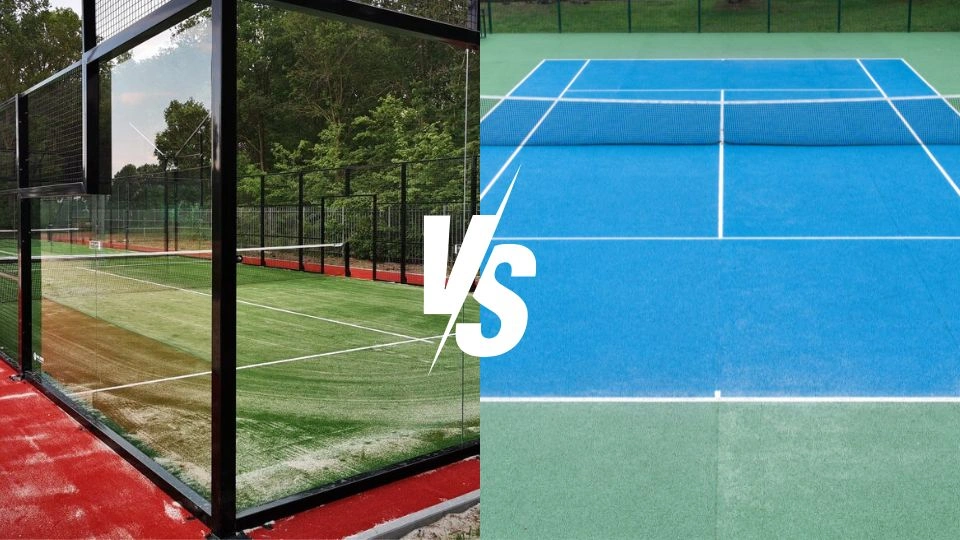
Tennis like sports are gaining massive popularity, with padel emerging as the fastest-growing racquet sport in the world. While tennis has long been the classic choice for racquet enthusiasts, padel offers a refreshing alternative that many find easier to master. Both sports share fundamental elements—racquets, balls, and nets—however, they deliver notably different experiences on the court. Tennis demands technical precision and individual excellence, whereas padel thrives on strategic wall play and doubles teamwork. Whether you’re a seasoned athlete or complete beginner, understanding these differences is crucial for finding your perfect match. Court dimensions, equipment specifications, serving techniques, and physical requirements all factor into which sport might better suit your natural abilities and preferences. By comparing these two dynamic racquet sports, we’ll help you determine if you’re better suited for tennis’s traditional challenge or padel’s accessible excitement.
Court and Equipment Differences
The physical environments of padel and tennis create fundamentally different playing experiences. From court dimensions to equipment specifications, these distinctions shape how each game feels and the skills required to excel.
Court Size: 23.77m x 8.23m vs 20m x 10m
The playing field represents one of the most obvious differences between these tennis like sports. Tennis courts provide significantly more ground to cover, measuring 23.77 meters in length and 8.23 meters in width for singles matches. For doubles tennis, the width expands to 10.97 meters.
In contrast, padel courts occupy a more compact space at precisely 20 meters long by 10 meters wide. This size difference is substantial—a padel court is approximately 25% smaller than a tennis court in total area. The practical implication is remarkable: you could fit roughly three padel courts in the space required for one tennis court.
These dimensional variations directly influence gameplay dynamics:
- Tennis requires extensive lateral and longitudinal movement across a larger area
- Padel focuses on quick, explosive movements in a more confined space
- The smaller padel court encourages faster-paced exchanges and intense rallies
Wall Use: None in Tennis vs Integral in Padel
Perhaps the most distinctive feature separating these sports is the physical boundary system. Tennis courts are completely open, with balls landing outside court lines considered out of play. Once a ball passes the boundary, the point ends.
Padel, conversely, incorporates walls as active playing surfaces. The court is enclosed by glass walls (minimum height of 3 meters) and metal mesh in the corners. The back walls extend higher at 4 meters. This enclosure transforms the fundamental nature of play since:
- Players can use walls strategically for rebounds
- Rallies continue after wall contact (provided the ball bounces on the floor first)
- Tactical angles become possible that simply don’t exist in tennis
The enclosed environment of padel creates a dynamic where points last longer and defensive recoveries are more feasible than in tennis.
Racket Design: Strung vs Solid Paddle
Equipment differences further distinguish these sports. Tennis racquets feature a strung frame that allows for generating spin, power, and control. They measure approximately 68 cm in length and weigh between 250-340 grams. The string tension can be adjusted to customize performance—tighter strings offer more control, while looser strings provide additional power.
Padel racquets (often called “palas”) differ markedly:
- Short (up to 45.5 cm), thick, and stringless
- Solid surface with perforated holes to reduce air resistance
- Heavier construction at 360-390 grams
- Typically made from composite materials with a foam core
This design yields less raw power but provides superior maneuverability and precision during close-range exchanges. The ball feel is distinctly different—more muted and direct with fewer vibrations compared to the trampoline effect of tennis strings.
Ball Pressure: 8.165 kg vs 4.6–5.2 kg
Although visually similar, tennis and padel balls have crucial technical differences. According to regulations, tennis balls maintain a pressure of 8.165 kg, whereas padel balls operate at significantly lower pressure between 4.6 and 5.2 kg.
This pressure differential directly influences gameplay by affecting:
- Ball bounce height: Padel balls bounce lower due to reduced pressure
- Rally pace: The lower-pressure padel ball travels slower through the air
- Game style: Tennis favors power and speed while padel emphasizes control and placement
The reduced pressure in padel balls specifically complements the enclosed court design, slowing the game enough to facilitate tactical exchanges rather than power-dominated play.
Gameplay and Rules
Beyond physical court differences, the rules and gameplay styles of tennis and padel create entirely different sporting experiences. From serving techniques to match formats, these distinctions influence how players approach each game.
Serve Style: Overhand vs Underhand
The serve fundamentally shapes the nature of each sport. In tennis, the overhand serve provides players with a powerful offensive weapon that can immediately win points. Conversely, padel requires an underhand serve, performed below hip height after the ball bounces. This limitation intentionally reduces power, transforming the serve from a potential winning shot into merely a point starter.
This difference creates opposite match dynamics – tennis serves frequently decide points directly, particularly at higher levels. Meanwhile, padel serves rarely win points outright, emphasizing precision and tactical positioning over raw power.
Scoring System: Identical Formats with Minor Variations
Both sports share remarkably similar scoring frameworks. Points progress as 15, 30, 40, game, with sets typically won at six games with a two-game margin. Likewise, matches typically follow a best-of-three set format, though men’s tennis sometimes uses best-of-five in Grand Slam tournaments.
Nevertheless, subtle variations exist. Padel frequently employs “no-ad” scoring, where the first team to win a point after deuce immediately wins the game. Additionally, professional padel commonly uses a “golden point” at deuce to determine game winners. Despite these nuances, players familiar with one sport can easily understand the other’s scoring.
Singles vs Doubles: Flexibility in Tennis vs Mandatory Doubles in Padel
Perhaps the most distinctive regulatory difference is format flexibility. Tennis thrives in both singles (1v1) and doubles (2v2), with singles dominating professional competitions. Singles tennis requires excellent physical conditioning as players must cover the entire court alone.
Padel, alternatively, is played exclusively as doubles. This mandatory team format fundamentally shapes padel’s identity as a social, collaborative sport. Players must constantly communicate with partners, coordinate movements, and anticipate each other’s actions. This requirement creates padel’s distinctive tactical dimension focusing on positioning, patience, and point construction instead of immediate winning shots.
Wall Rebounds and Extended Rallies in Padel
The inclusion of walls in padel creates a wholly unique gameplay dynamic absent from tennis. Once the ball bounces within the court, it may legally rebound off glass walls and remain playable. This rule enables players to create angles impossible in tennis and opens countless tactical possibilities.
Consequently, padel rallies last substantially longer. Professional men’s padel features approximately 10-11 strokes per rally, whereas men’s doubles tennis averages merely 2.5 strokes per point, with over 81.6% of points concluding in three shots or fewer.
The wall usage fundamentally transforms point structure. Padel players can let balls bounce off glass after hitting the ground, essentially giving a “second chance” at difficult shots. Furthermore, balls striking walls create unpredictable trajectories requiring specific game reading skills. This dynamic allows padel points to continue developing strategically versus tennis’s faster resolution once a ball travels beyond court boundaries.
Learning Curve and Accessibility
For newcomers to racquet sports, the learning journey represents a critical factor in long-term enjoyment. The contrasting accessibility between these tennis like sports reveals fundamental differences in how quickly players can feel competent and satisfied with their performance.
Beginner Experience: Steep in Tennis vs Quick in Padel
The learning trajectory in tennis presents substantial initial challenges. Mastering basic tennis elements requires significant time and practice—serves, forehands, backhands, and volleys each demand precise coordination, proper preparation, and countless repetitions to become effective. Initially, a complete beginner might spend several months before experiencing structured rallies.
In stark contrast, padel offers almost immediate gratification. First-time players often enjoy extended exchanges of 10-20 shots within their inaugural session. This rapid progression occurs because:
- The stringless racquet provides more forgiveness when striking the ball
- The smaller court dimensions reduce required movement
- The walls offer second chances when players miss their positioning
This accessibility factor largely explains padel’s meteoric popularity growth among beginners. Most newcomers can confidently rally within minutes, establishing a positive feedback loop that encourages continued play.
Movement and Footwork: Full-Court Sprinting vs Short Explosive Steps
The physical demands between these sports differ substantially in movement patterns. Tennis requires extensive court coverage with players frequently sprinting across large distances. Particularly in singles matches, players must maintain high-intensity movement for sometimes over two hours while executing powerful shots.
Padel, correspondingly, demands a different movement profile characterized by:
- Short, controlled steps and maintaining balance
- Quick direction changes in confined spaces
- Efficient use of walls for repositioning
Physiologically speaking, tennis taxes cardio systems heavily with repeated sharp directional changes across larger areas. Padel movements tend to be shorter, more intermittent, and involve frequent directional adjustments. This makes padel especially appealing for players seeking regular physical activity without major injury risks.
Shot Complexity: Spin and Power vs Control and Placement
Technical execution varies dramatically between these sports. Tennis emphasizes powerful winning shots—explosive serves, precise passing shots, and unstoppable smashes. The technique revolves around long swings, heavy topspin generation, and explosive movements.
Padel technique remains considerably more compact and controlled. The sport rewards:
- Positioning and timing over raw power
- Quick reactions and reflexes
- Strategic wall usage
- Touch and feel rather than brute force
Indeed, players transitioning from tennis to padel often struggle initially as they must significantly shorten their swings to adapt. Beyond technical adjustments, padel emphasizes tactical understanding—controlling net position, forcing opponents defensive, and gradually creating openings through patient point construction.
Overall, padel provides a more accessible entry point for most beginners seeking enjoyable racquet sport experiences, whereas tennis offers a deeper technical challenge with steeper but potentially more rewarding skill progression over time.
Physical and Tactical Demands
The athletic requirements and tactical mindsets separate these tennis like sports far more than their visible differences suggest. Understanding these distinctions helps players choose which activity better suits their physical capabilities and strategic preferences.
Endurance: Long Matches in Tennis vs Short Bursts in Padel
Tennis demands extensive endurance capacity, primarily in singles matches where players might maintain high intensity for over two hours. Players cover greater distances, reach higher speeds, execute more sprints, and experience longer rest intervals between rallies. This creates a physical profile dominated by repeated sprints across large court areas with substantial recovery periods.
Padel, alternatively, features shorter, more explosive movements with frequent directional changes. Research demonstrates that padel matches contain a higher total number of rallies with more volleys and ground strokes. Players typically maintain heart rates within 70%–80% of their maximal capacity, suggesting moderate but consistent cardiovascular demand. Considering that only about 33% of match time is spent in high-intensity zones (above 85% maximum heart rate), padel creates a different endurance profile—less continuous but more intense in short bursts.
Injury Risk: Joint Stress in Tennis vs Ankle/Wrist in Padel
Both sports present distinct injury patterns. Tennis places significant stress on joints through powerful strokes and longer running distances. The repeated explosive motions of tennis serves often lead to rotator cuff injuries.
Regarding injury frequency, padel shows an incidence rate of approximately 2.75 injuries per 1000 hours of play. Interestingly, amateur padel players experience more injuries at lower skill levels, possibly due to poorer physical conditioning and technique. The elbow represents the most frequently injured area in padel, often related to tendinous or muscular origins. Padel’s quick direction changes, turns, and frequent stops on smaller courts create vulnerability for ankle injuries.
Tactical Play: Power-Based vs Strategy-Oriented
The tactical approaches fundamentally differ between these sports. Tennis emphasizes winning shots—powerful serves, passing shots, and unstoppable smashes. Even though tactics exist in tennis (varying spin, moving opponents), the goal typically remains gaining advantage through power or precision.
Conversely, padel centers around strategy. Padel players demonstrated significantly higher serve efficiency, with first serve success rates of 80.17% compared to tennis players’ 61.17%. Padel emphasizes ball placement over power and positional teamwork. The enclosed walls create a game where patience and constructed points prevail over immediate winners.
This strategic distinction appears most evident in play statistics: padel features substantially longer rallies with professional men’s matches averaging 10-11 strokes per rally, whereas men’s doubles tennis averages merely 2.5 strokes per point. Even more telling, over 81.6% of tennis points conclude within three shots, highlighting tennis’s power-dominant nature versus padel’s strategic emphasis on extended point construction.
Which Sport Fits Your Style?
Selecting the right racket sport comes down to understanding your personal preferences and playing style. Both tennis like sports offer unique experiences based on your individual goals and natural inclinations.
If You Prefer Solo Play and Technical Mastery
Solo competitors generally gravitate toward tennis. Tennis provides a more solitary and intense experience with singles as the primary format. For those seeking individual performance and personal achievement, tennis offers virtually infinite technical depth. With tennis, you can spend years perfecting your serve, spin, and footwork while enjoying immense progression potential. Moreover, if you thrive on technical challenges and willingly invest time mastering fundamentals, the satisfaction of gradually developing your game becomes exceptionally rewarding.
If You Enjoy Social, Team-Based Sports
Padel excels in its social dimension. As a mandatory doubles game, padel naturally creates a friendly atmosphere with constant partner interaction. Padel clubs typically maintain a relaxed vibe with gathering spaces for post-match socialization. First and foremost, padel’s team-based format encourages communication, camaraderie, and collective strategy—making it ideal for friends and family outings. With this in mind, if you value teamwork and tactical cooperation, padel offers the perfect balance of competition and connection.
If You Want a Low-Impact, High-Fun Activity
Padel provides a gentler introduction to racket sports. Generally considered less physically demanding than tennis, padel features smaller courts, wall rebounds, and slower ball speeds. The reduced joint strain appeals particularly to former tennis players wanting to continue playing racquet sports safely. Equally important, padel allows longer gameplay without excessive fatigue, making it accessible for a broader audience including seniors. The doubles format spreads effort across teammates while underhand serves simplify execution for beginners.
If You Seek Long-Term Skill Development
Tennis demands patience but rewards disciplined practice. In effect, tennis requires greater technical and physical demands with emphasis on power, precision, and endurance. Primarily for those pursuing technical mastery, tennis offers a more competitive challenge with greater variety of strokes. Alternatively, padel also requires advanced technical skills at higher levels but focuses more on game intelligence, situational awareness, and partner coordination. If tactical thinking and collective strategy appeal to you, padel can provide equally captivating long-term development.
Conclusion
Tennis and padel offer distinctly different experiences despite their shared racquet sport heritage. Throughout this comparison, we’ve seen how these sports diverge significantly across multiple dimensions. Tennis presents a larger playing area demanding extensive movement, powerful strokes, and individual mastery. Padel, meanwhile, thrives in a smaller, enclosed environment where walls become strategic elements and doubles play remains mandatory.
The physical requirements likewise differ considerably. Tennis demands greater endurance with its longer rallies and extensive court coverage, whereas padel focuses on quick reactions, shorter bursts of energy, and tactical wall usage. Equipment variations further distinguish these sports—from the stringed racquets of tennis to the solid paddles of padel, each designed specifically for their respective playing environments.
Perhaps most significantly, these sports appeal to different player temperaments. Tennis attracts those who enjoy technical progression, individual achievement, and the satisfaction of mastering complex strokes. Padel draws players seeking social connection, accessible gameplay, and strategic team dynamics. Both sports unquestionably offer tremendous physical and mental benefits, though they deliver these rewards through contrasting pathways.
Ultimately, your choice between tennis and padel should reflect your personal preferences, physical capabilities, and social inclinations. Players who thrive on individual challenges and technical depth might gravitate toward tennis. Those valuing accessibility, social interaction, and strategic teamwork might find padel more fulfilling. Many enthusiasts actually enjoy both sports, appreciating how each satisfies different aspects of their athletic and social needs.
Regardless of which sport you choose, both tennis and padel provide excellent opportunities for physical activity, skill development, and competitive enjoyment. Your ideal match awaits—whether on the open court of tennis or within the walled arena of padel.